
Learn why many of our patients travel from out of state to see us. We deliver first-class prosthodontic services, guided by experienced, world-renowned prosthodontists in Atlanta.
Commonly, our patients ask, “What is a Prosthodontist?” or if they need a referral to see one. Here are some answers for you.
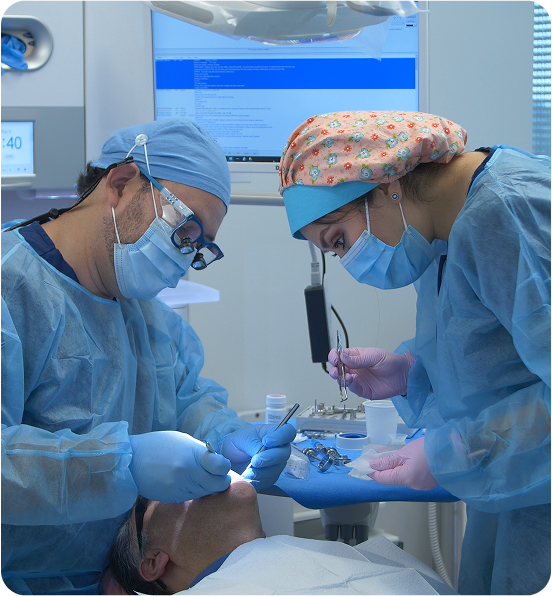
To become a Prosthodontist, a dentist must pursue three additional years of full-time clinical training in a school setting.
Georgia Prosthodontics is the only dental office in the Atlanta area with three experienced Prosthodontists who are experts in Full-Mouth Reconstruction, Dental Implants, Cosmetic and Aesthetic Dentistry, and TMJ management.
Prosthodontists specialize in diagnosing, planning, and treating a wide range of dental and oral health conditions. These often include:
Traumatic
Injuries
Full-Mouth
Reconstruction
Missing
Teeth
Congenital
or Developmental
Defects
Cosmetic
Concerns
Oral Cancer
Restoration
Complex
Dental Problems
Failed Dental
Restorations
Reconstruction
TMJ Disorders
Prosthodontics is one of the nine dental specialties recognized by the American Dental Association. It is the art of replacing missing teeth by prosthetic means, using advanced Implant Dentistry, Cosmetic Dentistry, and Oral Rehabilitation.
The maximum authority on Prosthodontics is the American Board of Prosthodontics, an organization of experts in the field that recognizes and certifies specialists in Prosthodontics.
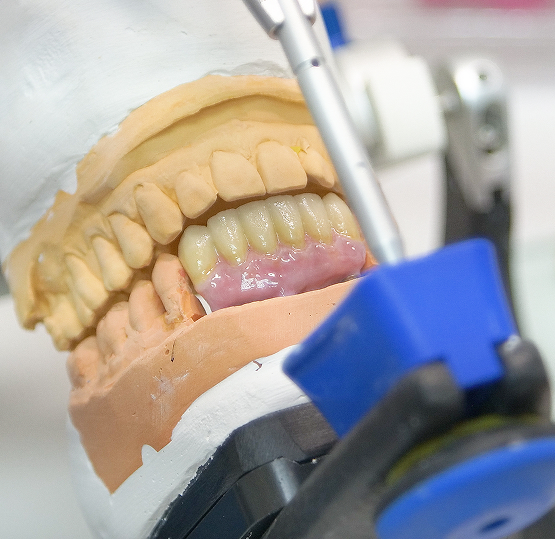
The American Board of Prosthodontics certifies individuals who have successfully completed the board certification testing in addition to the three years of educational requirements.
Board certification is a rigorous process that involves four stages, including oral and written examinations about Dental Implants, Complete and Removable Implant Dentures, Full-Mouth Reconstruction, and Cosmetic Dentistry from cases actually performed by the candidate.
Dr. Castro is uniquely qualified as a Board-Certified Prosthodontist in Georgia and has completed two years of additional surgical training in Implant Dentistry.
If you are looking for the highest standard of care, are missing one or more teeth, have concerns about the appearance of your smile, have complex dental problems, or need help with TMJ issues, then you are better served by a Prosthodontist.
Complex dental problems can be esthetic, structural, biological, or mechanical in nature. Each requires a different approach than conventional restorative dentistry.
Prosthodontists are extensively trained in planning and sequencing complex situations to drive them to success.
In some cases, a multidisciplinary approach is required, and Prosthodontists are experts at timing and coordinating these treatments. They often act as “quarterbacks” to orchestrate other specialists.
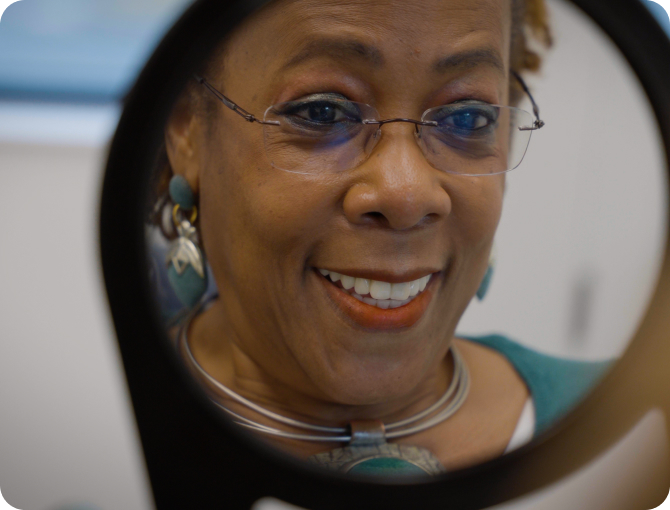
Although your general dentist is typically great at treating overall dental conditions, more advanced cases require the expertise of someone with rigorous training in complex situations.
This includes high esthetic or cosmetic requirements, implant dentistry, implant-supported dentures or bridges, and full-mouth reconstruction.
If your general dentist offers a complete mouth reconstruction, they may be working beyond their scope of training. Verify their credentials and expertise before proceeding, and feel free to seek a second opinion.
Although your general dentist is typically great at treating overall dental conditions, more advanced cases require the expertise of someone with rigorous training in complex situations.
This includes high esthetic or cosmetic requirements, implant dentistry, implant-supported dentures or bridges, and full-mouth reconstruction.
If your general dentist offers a complete mouth reconstruction, they may be working beyond their scope of training. Verify their credentials and expertise before proceeding, and feel free to seek a second opinion.
Prosthodontists are the only dental specialists with extensive clinical and hands-on training in cosmetic dentistry.
General dentists may pursue advanced education and hands-on courses, often outside clinical environments, and some develop excellent skills in cosmetic dentistry.
No, you do not need a referral to see a Prosthodontist. Simply call to make an appointment:
Prosthodontists usually collaborate in complex care of patients referred by other dentists and medical specialists:
01
Comprehensive Treatment Planning
Many dental or facial problems involve more than just replacing missing teeth. Issues related to bone structure, gum health, tooth alignment, and even speech can factor into a successful rehabilitation.
02
Specialized Expertise
Each dental specialist (and other medical professionals) brings unique skills. By teaming up, they can tackle complex cases more effectively. For example, an oral surgeon handles bone grafts or implant surgery, while a prosthodontist focuses on the design and fabrication of restorations.
03
Better Patient Outcomes
Collaboration ensures that each step of the treatment—from diagnosis and planning to surgery and restoration—is cohesive. This leads to more predictable and lasting results.
04
Efficiency and Patient Convenience
In many modern dental offices, you’ll find multiple specialists working together in one location. This approach can save patients time and reduce the number of separate office visits.
05
Long-Term Stability and Health
Comprehensive care that takes into account all aspects of oral health typically results in fewer complications down the road—like implant failure or re-treatment—because each specialist’s work supports the other’s.
Prosthodontists team up with a wide range of dental and medical professionals because restorative dentistry often intersects with surgery, gingival health, root canal treatment, orthodontics, speech function, and more. These collaborations aim to address the full scope of a patient’s needs, ensuring not only a good-looking smile but also a healthy, functional, and sustainable result.
Monday – Thursday:
08:00 AM – 05:00 PM
Friday:
08:00 AM – 02:00 PM
Correcting and improving the outcomes of prior dental treatments that may not have been successful or require revision.
Rebuilding and restoring teeth, gums, and jaw structures damaged by accidents or trauma.
Restoring teeth damaged by:
Treatment of conditions such as cleft palate, ectodermal dysplasia, amelogenesis imperfecta or other dental and facial abnormalities.
Designing and fabricating prostheses for patients who have lost oral or facial structures due to cancer surgery or trauma.
Addressing structural, mechanical, or functional issues, such as:
Enhancing the appearance of teeth and smile with:
Treatment for patients with severe tooth wear, decay, trauma, or congenital conditions that require complete oral rehabilitation.
Replacement of single, multiple, or all missing teeth using:
Why? For patients who have experienced facial trauma, oral cancer, or need complex reconstructive surgery, these medical specialists coordinate with prosthodontists to plan and execute full-mouth or facial rehabilitation. This might involve implant-retained prosthetics or specialized maxillofacial prostheses.
Why? In cases involving reconstructive jaw surgery or significant changes to the oral structures (e.g., after trauma or cancer treatment), prosthodontists and speech-language pathologists may work together to improve or restore speech function.
Why? Dental technicians fabricate the actual crowns, bridges, dentures, veneers, and implant restorations that prosthodontists design. Close collaboration ensures that the prosthesis (e.g., denture or crown) fits accurately, functions well, and looks natural.
Why? Ongoing maintenance of crowns, implants, and dentures is critical. Dental hygienists provide professional cleanings and patient education to ensure restorations remain in good condition and minimize the risk of gum disease or decay around restorations.
Why? Sometimes, proper alignment of teeth and jaws is necessary before placing prosthetic appliances like crowns, bridges, or dentures. By moving teeth into more ideal positions, an orthodontist can help create a better foundation for prosthodontic work.
Why? Before placing new restorations (like crowns), teeth may need root canal treatment if there is infection or pulp damage. Prosthodontists collaborate with endodontists to ensure the underlying tooth is healthy enough to support a restoration.
Why? Healthy gums and bone structure are crucial for successful prosthodontic work, such as crowns, bridges, and implants. Periodontists help manage gum disease, perform procedures like gum grafts, and maintain the periodontal health that underpins stable restorations.
Why? If tooth extractions, bone grafts, or placement of dental implants are needed, an oral surgeon is often called in. Prosthodontists and oral surgeons coordinate the plan for implant surgery and final tooth restoration, ensuring the surgical and restorative aspects fit together seamlessly.
Why? General dentists often identify a patient’s need for prosthodontic treatment (e.g., for missing or severely damaged teeth) and will refer patients to prosthodontists for more specialized care. After the prosthodontic phase of treatment, the patient may return to the general dentist for routine check-ups and maintenance.
Temporomandibular joint disorders that affect jaw function. This treatment focuses on restoring alignment and relieving pain